
BLA-PNL-1700-1000-B
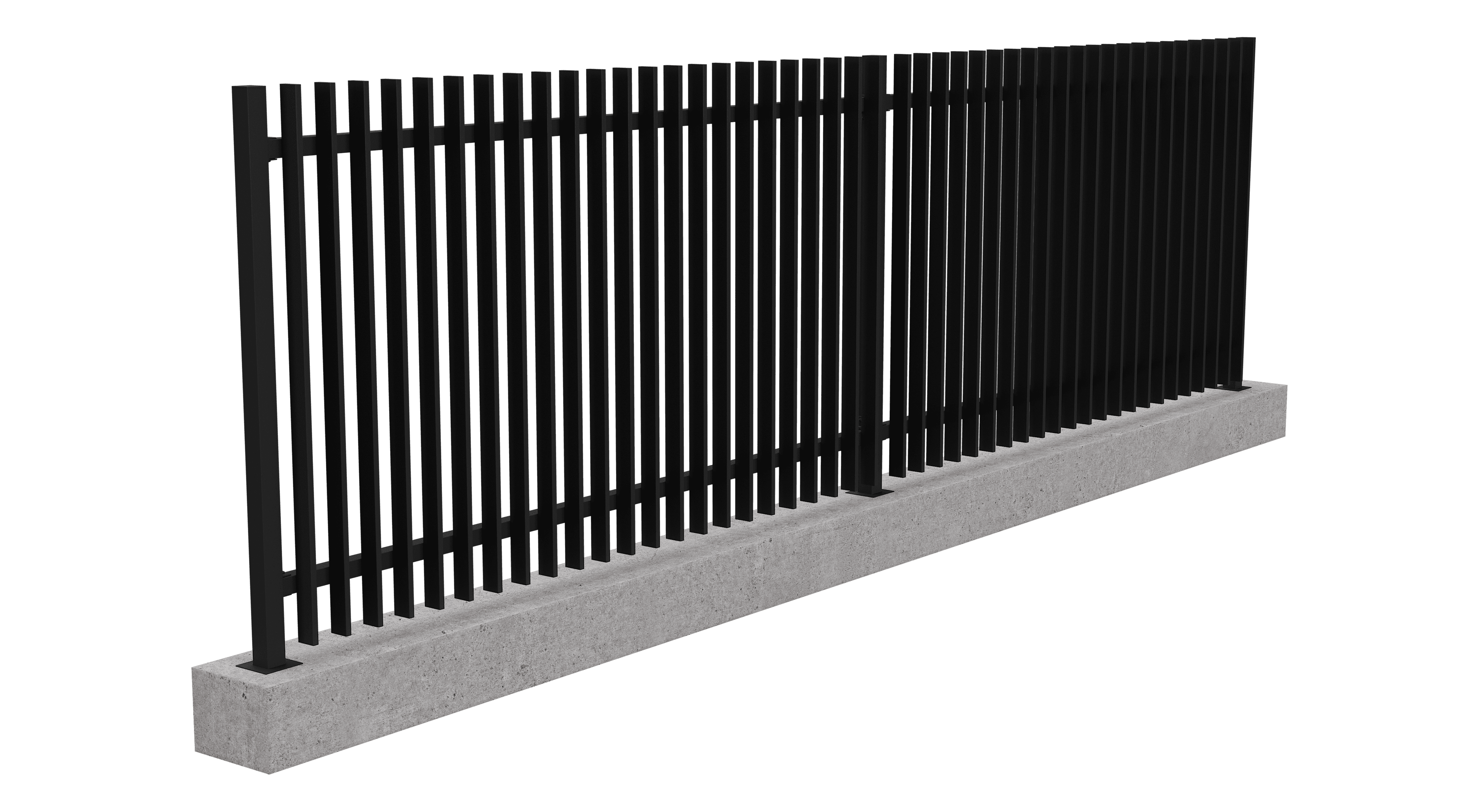
Blade boundary fence panel, 1700mm wide x 1000mm high, in matt black aluminium blade construction - not pool-fence rated.
$282.10inc GST
Louvred aluminium blades on slimline posts, a balcony rail with some screening and airflow, pre-engineered, no glass cert to chase.
Use the calculator to build your exact, compliant materials list, priced and ready to buy.
Blade Panels: part of the Blade system within Metal Balustrade. Browse the listing or use the calculator to build a complete BOM.

Posts: part of the Blade system within Metal Balustrade. Browse the listing or use the calculator to build a complete BOM.

Post Brackets: part of the Blade system within Metal Balustrade. Browse the listing or use the calculator to build a complete BOM.

Fixings: part of the Blade system within Metal Balustrade. Browse the listing or use the calculator to build a complete BOM.
A balustrade answers to the National Construction Code, with AS 1170 setting the loads. For a blade-profile aluminium rail:
Because the system is pre-engineered to the code, a compliant rail is the default. That's our Engineered to AS 1170 approach. If the balustrade also forms a pool barrier, AS 1926.1 (100mm gaps, non-climbable zone, self-closing gate) applies on top, and the calculator handles it.
Blade is the same system as the pool fence, run as a balustrade: narrow aluminium blades, angled or run flat, set in a slimline post frame for a louvred line. It gives you a bit of screening and a breeze through where a see-through rail gives neither, and it sits in the middle of the metal range, about level with BARR. Design-forward aluminium without the glass price tag.
Be straight on what "louvred" buys you: a balustrade-compliant Blade rail gives **partial** privacy and airflow, not a solid screen - the blade gaps have to stay open enough to meet the rules, so you get softened sightlines, not a wall. The other thing to know is that, unlike glass, the frame carries the load, so Blade is a pre-engineered modular system built to the code as a kit - no separate engineer to chase. What's left is the layout, and that's the fail point on any metal rail: post spacing, corners, the gate, raking down a stair. The calculator works all of that out from your runs, fixing surface and fall.
Blade is a design-forward aluminium balustrade built from blade-profile panels, narrow aluminium blades, angled or flat, in a slimline post frame for a louvred look. It's mid-range, about level with BARR, and the same system as the Blade pool fence.
Partial. A compliant Blade rail has to keep the blade gaps open enough to meet the rules, so you get softened sightlines and airflow - more screening than a picket or glass rail, but not a solid wall. If you want full privacy, that's a dedicated screen product; ask Joe and he'll point you at the right one.
Look and feel, they're priced about the same. BARR is a welded picket panel: see-through, a clean classic line. Blade is a louvred blade-profile panel: angled blades giving more screening and a more architectural look. Same aluminium family, two finishes.
A frameless glass rail carries its load through the glass, so the glass has to be engineered and certified. Blade's frame carries the load, so it's a pre-engineered modular system built to the code as a kit - no separate, job-by-job engineering certificate to chase.
Yes. The panels come made-up and fix to posts, so it's a straightforward post-and-panel job. The part people get wrong is the layout, post spacing, corners, the gate and raking down a stair, which is exactly what the calculator works out for you.
Slimline posts deck-mount on a base plate with M10 fixings, or face-mount to a slab edge with M12 fixings, those are the fixing diameters, not the panel size. The calculator works out which your situation needs and counts them.
Yes, raked panels step the rail down a stair or slope while holding the line and the gaps. The calculator works out where they go from your measurements.
Mid-range for metal - about level with BARR, the look without the glass price. We're supply-only, so the calculator gives an exact materials total for your run rather than a per-metre guess, with install labour separate.
Open the calculator for your exact panel, post and fixing count, built to the rules, in a few minutes. Or ask Joe, 30 years on the tools, straight answers, no sales pitch.
Open the calculatorNot sure what you need? Use the calculator above.
31 products
BLA-PNL-1700-1000-B
$282.10inc GST


Use the calculator to build your exact, compliant materials list, priced and ready to buy.